Occasionally some rare and small blog comes along that can completely change your outlook on what writing is supposed to be.
Teasparrows on livejournal does just that. Check them out!
Example of their work:
Untitled by shipsvsplanes
Mathematics has stolen my bones and has left me having heart-to-hearts with bedroom walls. You see, we're discussing the future of humankind and taking bets on who could care less. We're tracing our memoirs on the necks of our lovers and then casting them off to sea, never to be heard from again. And we can't even make them out anymore, but we can still hear them screaming 'Breathe in, breathe out, baby' and that is all I hear but I, myself, am a stubborn one who just doesn't play fair. And, these bedroom wall friends of mine, they just don't care.
Untitled by paintonthewall
I thought that if I threw my phone into the television,
it would make a nice sound. A satisfying crack,
glass raining onto the carpet. I really just want to wake you
up. Shake your bones and kiss your ears. Someone says,
"Words are a dangerous currency," and baby,
I'm flat broke, these are dust pockets, bad checks,
overdrawn thoracic cavities. Oh, how you hate it
when I use unfamiliar words, how small you say you become!
You get small and I get to sit around and feel my organs
disintegrate. Boo hoo, how sad we both are! How typical!
That's right, I'm hiding behind emphatic punctuation.
The next steps are: invitations to strangers, tasting
new bodies, leaving traces of rum on the doorknobs,
burning the furniture. This is, this is, this is.
We never had the definitions right.
Thursday, March 29, 2007


The New Look of 'Confessions'
I finally had the time to get good and annoyed at the current layout, so I have updated, based off of a magazine picture I have hanging in my room.
Don't like it? Think it's sloppy? Then you do it. ;)
The last one took me five hours, and I've given this about three, so there. Be happy.
Don't like it? Think it's sloppy? Then you do it. ;)
The last one took me five hours, and I've given this about three, so there. Be happy.
Friday, March 16, 2007
Artsy Blogs
Fabulous new blogs for you to check out. These are not of a writing theme; more of an artsy rebel kind, but we are all kissing cousins here in Art World.
A World of Birds

Little People Project


Wooster Streer Street Art Blog
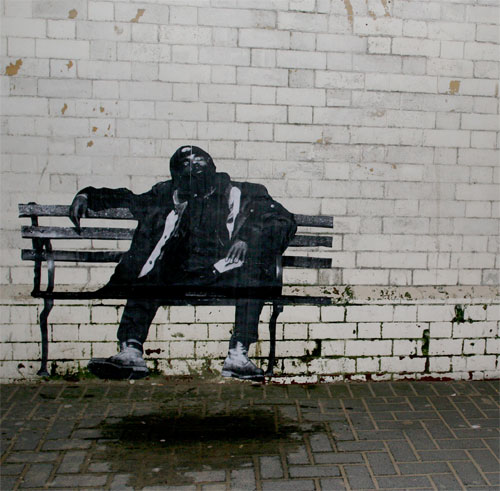
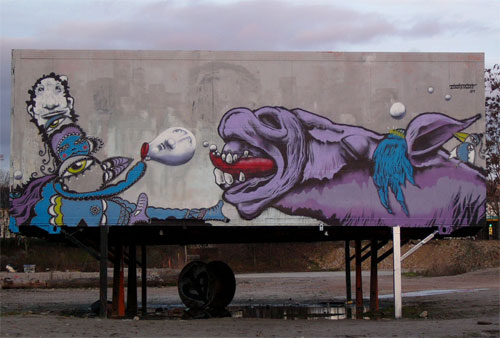
A World of Birds
Little People Project
Wooster Streer Street Art Blog
Friday, March 09, 2007
Young Blood
A recent community spotlight on liverjournal, called add_a_writer, has given our kind (haha, don't you love that? Our kind) the blatant opportunity to find each other.
Which has led me to some very interesting contacts, among them a very amateur (but eager and grammatically correct and multiple-clause-forming) writer, not even a writer yet, more of a fledgeling.
Did I set out to corrupt him and bring him to our ways? Of course! Being a writer is the best thing in the world! Aside from being, you know, like... some.... really... really cool guy... or something.... Myself, I think being a Magic 8 Ball would be pretty freakin awesome.

But this encounter with the Youth of Writing America (of which we all are, fellow teenagers), led me to recall some very painful writing beginnings.
Where were /you/ when you were 14 and had no clue what was going on and were just beginning to seriously write and think you might want to do that for the rest of your life? Writing was first like a crush, then a serious crush, then your blushing girlfriend, then your serious girlfriend, then your fiance, and then suddenly you wake up and find out you're married -and either will skip about the room fantastically ecstatic or have one of those violent and passionate careers with writing as both your lover and mistress, angel and devil, and a bunch of other contrasting terms. For more on this topic, see 'Lorca' and 'duende'.
(Insert creative and realistic picture of the duende here, since all of the google image searches produce nothing useful)
I did not think to target this blog at the younger population, mainly because it's suck a sticky and awkward phase, and I only know how I went through it, and couldn't possibly be of any real help, but now my feet are in it and I've lost my shoes, so I might as well stay.
That said...
WARNINGS TO YOUNG WRITERS!!!!!!!
1) Under no circumstances should you have ANYTHING to do with poetry.com . It is a scam. A big one. It will cost you your heart and dreams and leave you embarassed and upset, and probably out 60 bucks. Don't believe me? Type in 'poetry.com, scam' in google and read.
2) Under no circumstances should you have anything to do with the Pink Palace of Poetitude, or any other poetry or fiction sites, such as fanstory.com. The sites that cost you money are BAD.
3) You should, howerver, have things to do with Fanfiction.net and FictionPress.com as these are genuine sites which cost you nothing and will provide guaranteed feedback, provided you don't suck. And indeed, there are many careery opportunities for sucky writers. Look at Nora Roberts. (Don't anyone say anything about Stephen King because that man is both cheap and genius. Read his autobiography; it's not only wonderfully informative, it's a great insight into the mind of a real writer.)
4) Write short stories. As someone very wise once said, whose name I am too lazy to look up, the money is in novels, but short stories and personal narratives keep your writing lean and mean. And it's true.
5) Do NOT get a 'beta'. Have good friends who like your writing; do /not/ be dependent on them to edit or read your stuff. Edit your own writing. This is most vital. You can be a crappy writer as long as you rewrite brilliantly. Someone smart also said that.

Note: This is a beta fish, not a writing beta. Real beta's are your normal, wannabe-editor friends, like this:

ALSO NOTE!: There is a distinction between being a writer and being an editor. Some people are born editors. It is good to have relationships with these people, but only RARELY let them edit your stuff. Editors cannot be trusted, and they have wicked pens.
6) When you get your first praising reviews, do NOT get overexcited. This admonition is basically pointless, since you will anyway. Do NOT become dependent on the approval. If you are dependent on public support, you will lose the respect of your fellow writing community. As someone ELSE very wise once said, 'It is better to write for the self and have no public than to write for the public and have no self'.
7) Consult my list of 'Things Every Teenage Author Needs'. It's very useful.
8) Become infatuated with yourself. Seriously. Every writer has a large ego anyway; might as well get yours early. This will lead to all sorts of exciting self-discovery and love of your profession, and then you can grow up to be exclusionary and snobby like me. ^^
9) It's best not to pester older writers with your crap writing, but when you have to, you have to. Try not to be annoying.
Did I forget anything?
Which has led me to some very interesting contacts, among them a very amateur (but eager and grammatically correct and multiple-clause-forming) writer, not even a writer yet, more of a fledgeling.
Did I set out to corrupt him and bring him to our ways? Of course! Being a writer is the best thing in the world! Aside from being, you know, like... some.... really... really cool guy... or something.... Myself, I think being a Magic 8 Ball would be pretty freakin awesome.
But this encounter with the Youth of Writing America (of which we all are, fellow teenagers), led me to recall some very painful writing beginnings.
Where were /you/ when you were 14 and had no clue what was going on and were just beginning to seriously write and think you might want to do that for the rest of your life? Writing was first like a crush, then a serious crush, then your blushing girlfriend, then your serious girlfriend, then your fiance, and then suddenly you wake up and find out you're married -and either will skip about the room fantastically ecstatic or have one of those violent and passionate careers with writing as both your lover and mistress, angel and devil, and a bunch of other contrasting terms. For more on this topic, see 'Lorca' and 'duende'.
(Insert creative and realistic picture of the duende here, since all of the google image searches produce nothing useful)
I did not think to target this blog at the younger population, mainly because it's suck a sticky and awkward phase, and I only know how I went through it, and couldn't possibly be of any real help, but now my feet are in it and I've lost my shoes, so I might as well stay.
That said...
WARNINGS TO YOUNG WRITERS!!!!!!!
1) Under no circumstances should you have ANYTHING to do with poetry.com . It is a scam. A big one. It will cost you your heart and dreams and leave you embarassed and upset, and probably out 60 bucks. Don't believe me? Type in 'poetry.com, scam' in google and read.
2) Under no circumstances should you have anything to do with the Pink Palace of Poetitude, or any other poetry or fiction sites, such as fanstory.com. The sites that cost you money are BAD.
3) You should, howerver, have things to do with Fanfiction.net and FictionPress.com as these are genuine sites which cost you nothing and will provide guaranteed feedback, provided you don't suck. And indeed, there are many careery opportunities for sucky writers. Look at Nora Roberts. (Don't anyone say anything about Stephen King because that man is both cheap and genius. Read his autobiography; it's not only wonderfully informative, it's a great insight into the mind of a real writer.)
4) Write short stories. As someone very wise once said, whose name I am too lazy to look up, the money is in novels, but short stories and personal narratives keep your writing lean and mean. And it's true.
5) Do NOT get a 'beta'. Have good friends who like your writing; do /not/ be dependent on them to edit or read your stuff. Edit your own writing. This is most vital. You can be a crappy writer as long as you rewrite brilliantly. Someone smart also said that.
Note: This is a beta fish, not a writing beta. Real beta's are your normal, wannabe-editor friends, like this:
ALSO NOTE!: There is a distinction between being a writer and being an editor. Some people are born editors. It is good to have relationships with these people, but only RARELY let them edit your stuff. Editors cannot be trusted, and they have wicked pens.
6) When you get your first praising reviews, do NOT get overexcited. This admonition is basically pointless, since you will anyway. Do NOT become dependent on the approval. If you are dependent on public support, you will lose the respect of your fellow writing community. As someone ELSE very wise once said, 'It is better to write for the self and have no public than to write for the public and have no self'.
7) Consult my list of 'Things Every Teenage Author Needs'. It's very useful.
8) Become infatuated with yourself. Seriously. Every writer has a large ego anyway; might as well get yours early. This will lead to all sorts of exciting self-discovery and love of your profession, and then you can grow up to be exclusionary and snobby like me. ^^
9) It's best not to pester older writers with your crap writing, but when you have to, you have to. Try not to be annoying.
Did I forget anything?
Sunday, March 04, 2007
Visual AHHHHHHHHHHHHHness
As a writer, you are also a reader. Let's not get into lecturing on how great readers make great writers; that is for another post, or perhaps even unnecessary.
As a writer, you are also an observer.
And sometimes, observing takes a great toll on the mind... like observing four hours of television every day... or observing the hell out of your cereal box.
Sometimes the materialism and commercialism gets to be too much.
So, take the idea of author and artist Keri Smith, and cover up the labels with something creative!

Read this post for ideas.
As a writer, you are also an observer.
And sometimes, observing takes a great toll on the mind... like observing four hours of television every day... or observing the hell out of your cereal box.
Sometimes the materialism and commercialism gets to be too much.
So, take the idea of author and artist Keri Smith, and cover up the labels with something creative!
Read this post for ideas.
Monday, February 19, 2007
Make Your Local Bookstore Work For You
Confession: It has long been my dream to work in a bookstore, and, if you're a writer, probably yours too.
Confession: This remains a dream, as I have taken virtually no steps to actually get hired, aside from sheepishly asking if the bookstore I am currently buying in large abundance from is hiring at the moment.
And so... how to make your local bookstore work for you, and not just about hiring either!
Hiring
The mainstream stores (Barnes and Noble, Borders, etc.) will most likely ask you to fill out an application which they will keep on hand should one of their workers leave. The odds of getting hired: Not very good.
But something I learned recently is that they will most likely take you much sooner if not immediately depending on your availability. Which does not equate good news for students like us.
Getting Published
You are no doubt aware of the 'self-help' section, and probably also aware that information on getting published, editors, and literary agents is scant. THIS DOES NOT MEAN YOU GIVE UP. This means that you find the book you want online, go down to the store and request it with the service desk. They will have it shipped to the store and you can go and pick it up.
Literary Magazines
You've heard my spiel about Lit Mags before, but you maybe did not know this (or perhaps you did and I'm just very slow, because this only occurred to me recently): You know those stacks and racks of magazines the bookstore keeps in the corner, that, as a respectable reader you would never think of approaching?
Well.... they happen to have a section devoted to writers and literary magazines. What does this mean for you? Research! This means that more than likely they will carry a 'local' literary magazine, which you can then pick up, study, and submit to.
When You're Published... Increasing Your Circulation and Profits
This next bit may count as cheating, but it's a writer eat writer world out there, you know?
When you actually do get published, as in books, use this little hint to fool the statistics and increase your chances of being bought and read:
Call your local bookstore and say that you represent a book club interested in reading the book that you just had published! (But don't tell them it's you, the author; that would be silly). Ask that they order, say, 15 books to be delivered, give yourself a fake name, and then never go and pick them up. The bookstore is now forced to sell your books (tee hee).
You can also manually go into the store, pick up your books, and move them to a front display. It helps if they have 'discount' stickers on them (but, please, don't hope they do, because how demeaning is that?)
Any other helpful hints/tips?
Confession: This remains a dream, as I have taken virtually no steps to actually get hired, aside from sheepishly asking if the bookstore I am currently buying in large abundance from is hiring at the moment.
And so... how to make your local bookstore work for you, and not just about hiring either!
Hiring
The mainstream stores (Barnes and Noble, Borders, etc.) will most likely ask you to fill out an application which they will keep on hand should one of their workers leave. The odds of getting hired: Not very good.
But something I learned recently is that they will most likely take you much sooner if not immediately depending on your availability. Which does not equate good news for students like us.
Getting Published
You are no doubt aware of the 'self-help' section, and probably also aware that information on getting published, editors, and literary agents is scant. THIS DOES NOT MEAN YOU GIVE UP. This means that you find the book you want online, go down to the store and request it with the service desk. They will have it shipped to the store and you can go and pick it up.
Literary Magazines
You've heard my spiel about Lit Mags before, but you maybe did not know this (or perhaps you did and I'm just very slow, because this only occurred to me recently): You know those stacks and racks of magazines the bookstore keeps in the corner, that, as a respectable reader you would never think of approaching?
Well.... they happen to have a section devoted to writers and literary magazines. What does this mean for you? Research! This means that more than likely they will carry a 'local' literary magazine, which you can then pick up, study, and submit to.
When You're Published... Increasing Your Circulation and Profits
This next bit may count as cheating, but it's a writer eat writer world out there, you know?
When you actually do get published, as in books, use this little hint to fool the statistics and increase your chances of being bought and read:
Call your local bookstore and say that you represent a book club interested in reading the book that you just had published! (But don't tell them it's you, the author; that would be silly). Ask that they order, say, 15 books to be delivered, give yourself a fake name, and then never go and pick them up. The bookstore is now forced to sell your books (tee hee).
You can also manually go into the store, pick up your books, and move them to a front display. It helps if they have 'discount' stickers on them (but, please, don't hope they do, because how demeaning is that?)
Any other helpful hints/tips?
Wednesday, February 14, 2007
Happy Singles Awareness Day!
Just a friendly reminder to all single -and taken!- people out there...
Just because it is Valentine's day gives you /no/ excuse to write corny, cliched poetry, whether they be of a sappy or emo-depressed theme.
Have a nice day!
Just because it is Valentine's day gives you /no/ excuse to write corny, cliched poetry, whether they be of a sappy or emo-depressed theme.
Have a nice day!
Wednesday, January 31, 2007
Confessions - 2
And so my book is sent off to my contact, and now I wait.
Confession: It is perfectly fine to have maternal or paternal feelings towards your packaged book. Of course, if you are female I would, of course, recomment maternal feelings, and paternal for males, but if you wanted to break the mould and be a woman with paternal feelings, have at it and tell me about it.
So there I am, hugging my manila envelope stuffed tight with my work and injecting a good aura into and around it, which shall probably be dissipated as it travels among disgruntled mail workers.
But that is my confession.
Confession: It is perfectly fine to have maternal or paternal feelings towards your packaged book. Of course, if you are female I would, of course, recomment maternal feelings, and paternal for males, but if you wanted to break the mould and be a woman with paternal feelings, have at it and tell me about it.
So there I am, hugging my manila envelope stuffed tight with my work and injecting a good aura into and around it, which shall probably be dissipated as it travels among disgruntled mail workers.
But that is my confession.
Thursday, December 14, 2006
Confessions -1
My school is having a film festival, and since I've dabbled in the art myself, I figured to give it a go. It helps that the alpha female of my social group, who seems to have a high opinion of me, is going to college to be a producer. I have the experience and the script-writing skills, she has the filming technique down, I have the editing equipment and dedication, so we're set, right?
Wrong.
We needed actors.
With a script already written and possible actors/actresses picked out, one of the people we were counting on flatly refused to do it.
We had to find someone else.
The person we chose I shall call Mark. He is an orbital of the inner social group, and nice enough. We asked him. I emailed him the script.
He approached me the next day and said (I nearly quote): "Yeah, yeah, I really liked it, but... would you like me to clean your script up for you?"
I stared at him for a second, then turned and called over my alpha female in a high, wavering, panic voice.
/Clean up/ my script?!
He apparently had a brief brush with film over the summer (shooting a very poorly-executed fight scene starring, ironically, the guy we originally cast for this part but who refused), and as such thought he could lend a vast ammount of expertise to the project.
We were offended, hid it, and told him no thank you.
In subsequent emails, it came out that he was a "self-titled 'good' writer" -which should send warning signals shooting through your head.
Writerly Rules of Ettiquette Number One: /NEVER/ call yourself 'good' unless you can do it honestly and with no self-consciousness and unless it has been proven that you /are/ good. No, your friends and family saying they liked it does not count.
If someone bluntly asks if you are good, always sidestep the question. It is incredibly rude and very amateurish to label yourself as anything praiseworthy. Let the readers decide for themselves if you are good or not.
To get back to my story, within the flurry of emails, he asked about my writing credits.
Here I sort of committed the cardinal sin I just described. I have been published. I have been highly praised by members of the elite writing world. I have attracted the interest and love of readers on several online sites. I am recognized in all my writing and english classes as a 'good' writer. Does this actually make me 'good'? Can any writer ever finally assume themselves 'good'?
Taking a chance, and assuming by his 'self-titling' that he was a mediocre to bad writer, I figured that there was a very good chance I was better than him (O! such mean and poor terms, O! such ego!) and explained in no uncertain terms the extent of my experience.
I do not take writing lightly, and I will not tolerate assaults on my authority. This is a personality/character flaw of mine, and I do not recommend you develop it, unless you eventually plan to be a Supreme Bitch On Wheels, as I later turned into.
And thus, this is my confession. Sometimes... you just have to call yourself good and believe in it, and completely crush the opposition. Sometimes you have to ridicule other wannabe writers in private while secretly sweating, terrified that you are one of them as well.
And you? What horrid ego-centered, writer-related things have you done, said, encountered?
Wrong.
We needed actors.
With a script already written and possible actors/actresses picked out, one of the people we were counting on flatly refused to do it.
We had to find someone else.
The person we chose I shall call Mark. He is an orbital of the inner social group, and nice enough. We asked him. I emailed him the script.
He approached me the next day and said (I nearly quote): "Yeah, yeah, I really liked it, but... would you like me to clean your script up for you?"
I stared at him for a second, then turned and called over my alpha female in a high, wavering, panic voice.
/Clean up/ my script?!
He apparently had a brief brush with film over the summer (shooting a very poorly-executed fight scene starring, ironically, the guy we originally cast for this part but who refused), and as such thought he could lend a vast ammount of expertise to the project.
We were offended, hid it, and told him no thank you.
In subsequent emails, it came out that he was a "self-titled 'good' writer" -which should send warning signals shooting through your head.
Writerly Rules of Ettiquette Number One: /NEVER/ call yourself 'good' unless you can do it honestly and with no self-consciousness and unless it has been proven that you /are/ good. No, your friends and family saying they liked it does not count.
If someone bluntly asks if you are good, always sidestep the question. It is incredibly rude and very amateurish to label yourself as anything praiseworthy. Let the readers decide for themselves if you are good or not.
To get back to my story, within the flurry of emails, he asked about my writing credits.
Here I sort of committed the cardinal sin I just described. I have been published. I have been highly praised by members of the elite writing world. I have attracted the interest and love of readers on several online sites. I am recognized in all my writing and english classes as a 'good' writer. Does this actually make me 'good'? Can any writer ever finally assume themselves 'good'?
Taking a chance, and assuming by his 'self-titling' that he was a mediocre to bad writer, I figured that there was a very good chance I was better than him (O! such mean and poor terms, O! such ego!) and explained in no uncertain terms the extent of my experience.
I do not take writing lightly, and I will not tolerate assaults on my authority. This is a personality/character flaw of mine, and I do not recommend you develop it, unless you eventually plan to be a Supreme Bitch On Wheels, as I later turned into.
And thus, this is my confession. Sometimes... you just have to call yourself good and believe in it, and completely crush the opposition. Sometimes you have to ridicule other wannabe writers in private while secretly sweating, terrified that you are one of them as well.
And you? What horrid ego-centered, writer-related things have you done, said, encountered?
Thursday, November 23, 2006
25 Reasons to Keep Writing
Taken from Maya
25 Reasons to Keep Writing
1. Because sometimes metaphors work better than just words
2. Angst makes me feel alive
3. Impossible yearning is the most powerful feeling of all
4. Drugs are expensive
5. I like infinity, and combinations of letters are endless
6. Because I am a gateway to the Land of Unwritten Ideas
7. I like feeling important
8. I like laughing at typos
9. I want to remember everything
10. Because sometimes you just have to escape
11. Because sometimes no one can tell the story better
12. Characters are counting on me
13. Friends are counting on me
14. The what-ifs are more entertaining
15. Absolute omnipotence and power
16. There is nothing else
17. I’m bored
18. Keyboards make funny sounds
19. Dreams are more realistic anyway
20. To educate the world on the importance of cats over men
21. Everything sounds better in poetic format
22. Because being brainless is overrated
23. Cause people fear you easier
24. It helps with the loneliness
25. The electric possibility of getting it right, and the smaller, quiet beauty of almost.
25 Reasons to Keep Writing
1. Because sometimes metaphors work better than just words
2. Angst makes me feel alive
3. Impossible yearning is the most powerful feeling of all
4. Drugs are expensive
5. I like infinity, and combinations of letters are endless
6. Because I am a gateway to the Land of Unwritten Ideas
7. I like feeling important
8. I like laughing at typos
9. I want to remember everything
10. Because sometimes you just have to escape
11. Because sometimes no one can tell the story better
12. Characters are counting on me
13. Friends are counting on me
14. The what-ifs are more entertaining
15. Absolute omnipotence and power
16. There is nothing else
17. I’m bored
18. Keyboards make funny sounds
19. Dreams are more realistic anyway
20. To educate the world on the importance of cats over men
21. Everything sounds better in poetic format
22. Because being brainless is overrated
23. Cause people fear you easier
24. It helps with the loneliness
25. The electric possibility of getting it right, and the smaller, quiet beauty of almost.
Saturday, November 18, 2006
So you wanna be a writer?
All right. It's time to buckle down and get on it.
Introduction to Publishing:
1) Write a good piece. Don't roll your eyes at me; this is a vital step. So far all we've talked about is the writing process. You should have that down by now. So don't forget this step.
2) Research. You want to start submitting your pieces. Okay. Where do you submit them? You should submit them to a literary magazine.
What literary magazine? How do I find out about literary magazines? You're in luck. I have a website for you: Click here!
the above is a comprehensive list of literary magazines that welcome submissions. Now we have to get into the tricky stuff.
Why research? you say. You should be able to find the 'submissions' page pretty easily on any literary magazine site. VERY CAREFULLY read their requirements. If you do not conform to what the magazine wants you to do, they will dismiss you as an idiot and you don't get published.
3) What is an SASE? An SASE is a Self-Adressed Stamped Envelope. You should include this in your literary package so if you are rejected they can send you a rejection letter. Also, if you want your manuscript back, you should include an SASE big enough to send it back in.
4) What is a cover letter? A cover letter is the very short and brief business letter that you put as the first page of your work. You can find out a lot about cover letters on the Internet, but to save you the trouble of searching through the flak, here are the ones I found helpful:
Cover letters in general:
Making Light
Sample Cover Letters
Poetry:
Poetry Submissions
Novels:
Novel Submisions
5) How do I format my work? I'm glad you asked. The correct way to do it is, first of all, put everything in font sized twelve, and a basic font. Times New Roman is preferrable. Next, center your title and put it in all capitals. Then push it all the way down to the middle of the page (this, apparently, leaves room for editor comments or something).

At the top of all of your pages should be a header. On the first page, make the header say your name, in the next two lines your address, then your phone number, and then your email address. This should all be left-aligned.

Still on the first page, right aligned -the amount of words your work is.

Next we move on to the other pages. The first problem you're going to encounter, if you're using Microsoft Word (This is the only kind of thing I'm an expert in, so if you have problems in other kinds of documents, you're on your own), is that the headers do not want to be different on different pages. You can easily fix this by double-clicking in the header, and a menu bar will pop up. Click on the icon that looks like an open book (it should be blue and white).
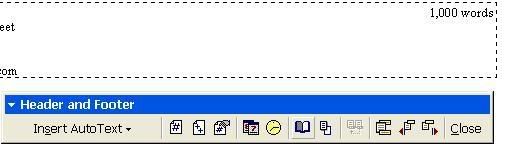
Then, when the new menu pops up, click on 'Different First Page'.

You may now go and edit the headers on the rest of your pages.
The headers on the rest of your pages should be right-aligned, with your name, then the page number, and on the next line the title of your story, in capitals.
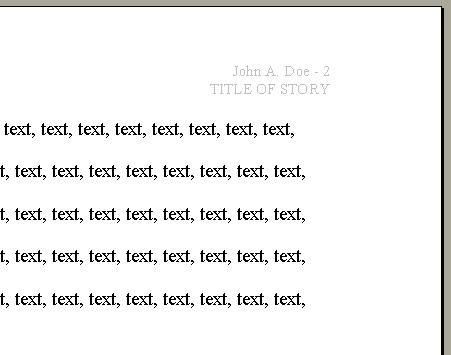
You can make the header put in the pages automatically for you by, in the header menu, pressing the white page with the # sign on it.
Font in the headers should be the same as in the document, and the size should be 10, if you're using a 12 font.
Now for the finale -the ending.
There are multiple ways to signal that you are done with your piece. You can do this:
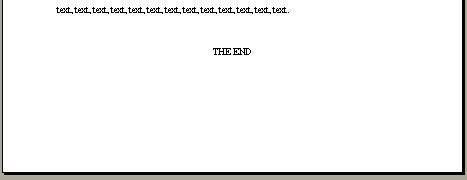
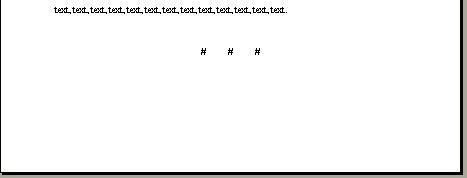
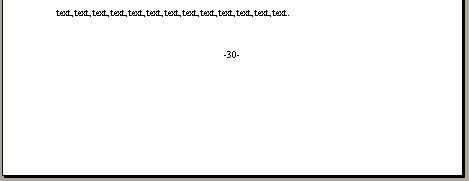
I don't know why these are acceptable signals for 'the end', but they are. Make sure they're centered.
Also, one final tip....
If you are including multiple pieces, you only need one cover letter, but you should put a blank piece of paper between submissions.
Also, if you are submitting poetry, there is no need to doublespace.
Hope this was helpful!
Introduction to Publishing:
1) Write a good piece. Don't roll your eyes at me; this is a vital step. So far all we've talked about is the writing process. You should have that down by now. So don't forget this step.
2) Research. You want to start submitting your pieces. Okay. Where do you submit them? You should submit them to a literary magazine.
What literary magazine? How do I find out about literary magazines? You're in luck. I have a website for you: Click here!
the above is a comprehensive list of literary magazines that welcome submissions. Now we have to get into the tricky stuff.
Why research? you say. You should be able to find the 'submissions' page pretty easily on any literary magazine site. VERY CAREFULLY read their requirements. If you do not conform to what the magazine wants you to do, they will dismiss you as an idiot and you don't get published.
3) What is an SASE? An SASE is a Self-Adressed Stamped Envelope. You should include this in your literary package so if you are rejected they can send you a rejection letter. Also, if you want your manuscript back, you should include an SASE big enough to send it back in.
4) What is a cover letter? A cover letter is the very short and brief business letter that you put as the first page of your work. You can find out a lot about cover letters on the Internet, but to save you the trouble of searching through the flak, here are the ones I found helpful:
Cover letters in general:
Making Light
Sample Cover Letters
Poetry:
Poetry Submissions
Novels:
Novel Submisions
5) How do I format my work? I'm glad you asked. The correct way to do it is, first of all, put everything in font sized twelve, and a basic font. Times New Roman is preferrable. Next, center your title and put it in all capitals. Then push it all the way down to the middle of the page (this, apparently, leaves room for editor comments or something).
At the top of all of your pages should be a header. On the first page, make the header say your name, in the next two lines your address, then your phone number, and then your email address. This should all be left-aligned.
Still on the first page, right aligned -the amount of words your work is.
Next we move on to the other pages. The first problem you're going to encounter, if you're using Microsoft Word (This is the only kind of thing I'm an expert in, so if you have problems in other kinds of documents, you're on your own), is that the headers do not want to be different on different pages. You can easily fix this by double-clicking in the header, and a menu bar will pop up. Click on the icon that looks like an open book (it should be blue and white).
Then, when the new menu pops up, click on 'Different First Page'.
You may now go and edit the headers on the rest of your pages.
The headers on the rest of your pages should be right-aligned, with your name, then the page number, and on the next line the title of your story, in capitals.
You can make the header put in the pages automatically for you by, in the header menu, pressing the white page with the # sign on it.
Font in the headers should be the same as in the document, and the size should be 10, if you're using a 12 font.
Now for the finale -the ending.
There are multiple ways to signal that you are done with your piece. You can do this:
I don't know why these are acceptable signals for 'the end', but they are. Make sure they're centered.
Also, one final tip....
If you are including multiple pieces, you only need one cover letter, but you should put a blank piece of paper between submissions.
Also, if you are submitting poetry, there is no need to doublespace.
Hope this was helpful!
Friday, November 17, 2006
Published!
I return to you triumphant, for I have been published for the first time.
In May, I sent a personal narrative to this large, paper magazine my school got, called TeenInk. Usually I shy away from 'teen-focused' things, because they tend to be cory and silly, and who wants to be associated with that?
But I was desperate, and so sent off my article. Nothing happened. I figured it hadn't been accepted, so no big deal.
Then today, just after submitting professional articles to The Paris Review, I get a package in the mail, from TeenInk. I figure it's the free copy I requested that they /finally/ got around to sending, but there's also this letter in it, and the first line says 'Dear Published Contributor'....
After a lot of screaming and jumping around and feeling silly, I was able to calm down and realize that this is the first time I have been professionally published anywhere.
So this post is all about celebration.
You can read the article Here for the month of November.
Thank you, and goodnight.
In May, I sent a personal narrative to this large, paper magazine my school got, called TeenInk. Usually I shy away from 'teen-focused' things, because they tend to be cory and silly, and who wants to be associated with that?
But I was desperate, and so sent off my article. Nothing happened. I figured it hadn't been accepted, so no big deal.
Then today, just after submitting professional articles to The Paris Review, I get a package in the mail, from TeenInk. I figure it's the free copy I requested that they /finally/ got around to sending, but there's also this letter in it, and the first line says 'Dear Published Contributor'....
After a lot of screaming and jumping around and feeling silly, I was able to calm down and realize that this is the first time I have been professionally published anywhere.
So this post is all about celebration.
You can read the article Here for the month of November.
Thank you, and goodnight.
Tuesday, November 07, 2006
Three-Line Poetry
The benefits of short poetry:
1) They don't take forever to write!
2) Editing is a cinch.
3) The point comes across loud and clear.
4) Easy to memorize.
5) Easeir to be humorous and sarcastic
Something I wrote (comedically) today:
The Three-Year-Old’s Threat
Don’t leave me alone.
You’ll regret it.
I’ll scream.

1) They don't take forever to write!
2) Editing is a cinch.
3) The point comes across loud and clear.
4) Easy to memorize.
5) Easeir to be humorous and sarcastic
Something I wrote (comedically) today:
The Three-Year-Old’s Threat
Don’t leave me alone.
You’ll regret it.
I’ll scream.
Monday, October 23, 2006
Copyright
While copyright lawyers are nice -and expensive-, there is a more common way to easily copyright your work. Simply make it all nice and in final format, then... send it to yourself.
You can request things at the post office that will officially date and/or keep track of your passage so there is an /official/ record of when it is sent. Then, should you encounter any copyright troubles, you have your original material safe and sound in a literal safe or freezer or refrigerator unit (Try to get something that is flame-proof).
More on shipping and formatting later...
You can request things at the post office that will officially date and/or keep track of your passage so there is an /official/ record of when it is sent. Then, should you encounter any copyright troubles, you have your original material safe and sound in a literal safe or freezer or refrigerator unit (Try to get something that is flame-proof).
More on shipping and formatting later...
Monday, October 16, 2006
Printing
I have just completed my first professional printing. I have a stack of my work, my first manuscripts, piled neatly on the desk beside me.
I feel very, very young and innocent, like this is the time /before/, when I still had hopes of being published and still had hopes of making everything work out. Hey, what am I saying? This /is/ the time before!
And so this week we shall focus on courage (and proper formatting, because man oh man are there a lot of rules).
Firstly, on random courage:
I don’t have the courage
I don’t have the courage
To stand in the dark
In the middle of the room
Staring at the mirror
I don’t have the courage
To tell my father what I think
Or tell my step mom that I really don’t give a fuck
What happens to her damned towels
I don’t have the courage to go out door to door selling things
So that I’ll have enough money for me to have the courage
To invite people over to our house and
Not be ashamed
I don’t have the courage to tell people
That they are rich if they live in a house that big
And have that many pairs of Gucci shoes
I don’t have the courage to tell that boy how I really feel
Or tell that other boy to get his filthy eyes
Off my fucking body
I don’t even have the courage
To write louder
Than a tiny spider creeping across the floor
Because my step mom might still be up
Trying to catch me in the act
And then I wouldn’t be able to write anymore
Burkina Faso
Secondly, on courage for writing:
It is impossible to discourage the real writers - they don't give a damn what you say, they're going to write. ~Sinclair Lewis
This manuscript of yours that has just come back from another editor is a precious package. Don't consider it rejected. Consider that you've addressed it 'to the editor who can appreciate my work' and it has simply come back stamped 'Not at this address'. Just keep looking for the right address. ~Barbara Kingsolver
A good many young writers make the mistake of enclosing a stamped, self-addressed envelope, big enough for the manuscript to come back in. This is too much of a temptation to the editor. ~Ring Lardner
I feel very, very young and innocent, like this is the time /before/, when I still had hopes of being published and still had hopes of making everything work out. Hey, what am I saying? This /is/ the time before!
And so this week we shall focus on courage (and proper formatting, because man oh man are there a lot of rules).
Firstly, on random courage:
I don’t have the courage
I don’t have the courage
To stand in the dark
In the middle of the room
Staring at the mirror
I don’t have the courage
To tell my father what I think
Or tell my step mom that I really don’t give a fuck
What happens to her damned towels
I don’t have the courage to go out door to door selling things
So that I’ll have enough money for me to have the courage
To invite people over to our house and
Not be ashamed
I don’t have the courage to tell people
That they are rich if they live in a house that big
And have that many pairs of Gucci shoes
I don’t have the courage to tell that boy how I really feel
Or tell that other boy to get his filthy eyes
Off my fucking body
I don’t even have the courage
To write louder
Than a tiny spider creeping across the floor
Because my step mom might still be up
Trying to catch me in the act
And then I wouldn’t be able to write anymore
Burkina Faso
Secondly, on courage for writing:
It is impossible to discourage the real writers - they don't give a damn what you say, they're going to write. ~Sinclair Lewis
This manuscript of yours that has just come back from another editor is a precious package. Don't consider it rejected. Consider that you've addressed it 'to the editor who can appreciate my work' and it has simply come back stamped 'Not at this address'. Just keep looking for the right address. ~Barbara Kingsolver
A good many young writers make the mistake of enclosing a stamped, self-addressed envelope, big enough for the manuscript to come back in. This is too much of a temptation to the editor. ~Ring Lardner
Sunday, October 01, 2006
Somewhere I have never travelled
I do not remember if I shared this before, and because blogspot will not let me look at my July entries, I shall just repost because this is good enough for you to look at a second time.
Introducing 'Somewhere I Have Never Travelled', by E.E. Cummings
(And yes, this is all how he wrote it; I'm not copying from a gramatically-challenged website somewhere)

somewhere i have never travelled, gladly beyond
any experience, your eyes have their silence:
in your most frail gesture are things which enclose me,
or which i cannot touch because they are too near
your slightest look will easily unclose me
though i have closed myself as fingers,
you open always petal by petal myself as Spring opens
(touching skillfully, mysteriously) her first rose
or if your wish be to close me, i and
my life will shut very beautifully, suddenly,
as when the heart of this flower imagines
the snow carefully everywhere descending;
nothing which we are to perceive in this world equals
the power of your intense fragility: whose texture
compels me with the color of its countries,
rendering death and forever with each breathing
(i do not know what it is about you that closes
and opens; only something in me understands
the voice of your eyes is deeper than all roses)
nobody, not even the rain, has such small hands
-----------------------------------------------------------------------
The love abounds for that phrase 'not even the rain has such small hands'. Kudos to Cummings for the imagery.
And now for your favorite part, the pretty pictures:


Introducing 'Somewhere I Have Never Travelled', by E.E. Cummings
(And yes, this is all how he wrote it; I'm not copying from a gramatically-challenged website somewhere)
somewhere i have never travelled, gladly beyond
any experience, your eyes have their silence:
in your most frail gesture are things which enclose me,
or which i cannot touch because they are too near
your slightest look will easily unclose me
though i have closed myself as fingers,
you open always petal by petal myself as Spring opens
(touching skillfully, mysteriously) her first rose
or if your wish be to close me, i and
my life will shut very beautifully, suddenly,
as when the heart of this flower imagines
the snow carefully everywhere descending;
nothing which we are to perceive in this world equals
the power of your intense fragility: whose texture
compels me with the color of its countries,
rendering death and forever with each breathing
(i do not know what it is about you that closes
and opens; only something in me understands
the voice of your eyes is deeper than all roses)
nobody, not even the rain, has such small hands
-----------------------------------------------------------------------
The love abounds for that phrase 'not even the rain has such small hands'. Kudos to Cummings for the imagery.
And now for your favorite part, the pretty pictures:
Thursday, September 28, 2006
The Phrontistery
Have you ever been writing and you wanted to use a word but you didn't know what it was? Did you ever, after hours of searching and using dictionaries and thesaurae, come to find out that the word you had in mind did not exist?
Perhaps you were looking for a word that your writer's genetic memory knew -but that you did not.
Folks, I've got the answer: The Phrontistery

The Phrontistery is a registery of old and forgotten English words that you can find in no modern (or even semi-ancient) dictionary.
Some of my favorites that I've discovered lately are:
Welmish –of a pale, sickly color
Empyreal -of, like or pertaining to heaven; sublime; skyward
Inocciduous –of a star, never setting
Nubivagant –moving through the clouds
And, for you classical poets out there:
Rhodologist –one who studies or classifies roses
(Remind me to rant about roses at a later date)

Anyway, I encourage the checking-outage of the website. If you want to go straight to the glossary, and are having a hard time finding it, here is the direct link:
The Phrontistery's Glossary by Letter
Perhaps you were looking for a word that your writer's genetic memory knew -but that you did not.
Folks, I've got the answer: The Phrontistery
The Phrontistery is a registery of old and forgotten English words that you can find in no modern (or even semi-ancient) dictionary.
Some of my favorites that I've discovered lately are:
Welmish –of a pale, sickly color
Empyreal -of, like or pertaining to heaven; sublime; skyward
Inocciduous –of a star, never setting
Nubivagant –moving through the clouds
And, for you classical poets out there:
Rhodologist –one who studies or classifies roses
(Remind me to rant about roses at a later date)
Anyway, I encourage the checking-outage of the website. If you want to go straight to the glossary, and are having a hard time finding it, here is the direct link:
The Phrontistery's Glossary by Letter
Friday, September 22, 2006
Marillion
Introducing the musical group Marillion. As musicians they have yet to appeal to me, but their song lyrics/poetry are certainly worth examining:

Excerpt from their famous song, Kayleigh:
Do you remember chalk hearts melting on a playground wall
Do you remember dawn escapes from moon washed college halls
Do you remember the cherry blossom in the market square
Do you remember I thought it was confetti in our hair

Excerpt from Psuedo Silk Kimono:
Huddled in the safety of a pseudo silk kimono
wearing bracelets of smoke, naked of understanding.
Nicotine smears, long, long dried tears, invisible tears.
Safe in my own words, learning from my own words,
Cruel joke, cruel joke.

Excerpt from Beautiful:
Everybody knows that we live in a world where they
give bad names to beautiful things
Everybody knows that we live in a world where we don't
give beautiful things a second glance
Heaven only knows that we live in a world where what
we call beautiful is just something on sale
People laughing behind their hands while the fragile
and the sensitive are given no chance
And the leaves turn from red to brown
To be trodden down
To be trodden down
And the leaves turn from red to brown
Fall to the ground
Fall to the ground
---------------------------------------------------------------------------
So. Take a look at their lyrics, be inspired, go to town. Peace out.

Excerpt from their famous song, Kayleigh:
Do you remember chalk hearts melting on a playground wall
Do you remember dawn escapes from moon washed college halls
Do you remember the cherry blossom in the market square
Do you remember I thought it was confetti in our hair
Excerpt from Psuedo Silk Kimono:
Huddled in the safety of a pseudo silk kimono
wearing bracelets of smoke, naked of understanding.
Nicotine smears, long, long dried tears, invisible tears.
Safe in my own words, learning from my own words,
Cruel joke, cruel joke.
Excerpt from Beautiful:
Everybody knows that we live in a world where they
give bad names to beautiful things
Everybody knows that we live in a world where we don't
give beautiful things a second glance
Heaven only knows that we live in a world where what
we call beautiful is just something on sale
People laughing behind their hands while the fragile
and the sensitive are given no chance
And the leaves turn from red to brown
To be trodden down
To be trodden down
And the leaves turn from red to brown
Fall to the ground
Fall to the ground
---------------------------------------------------------------------------
So. Take a look at their lyrics, be inspired, go to town. Peace out.
Friday, September 08, 2006
Brian Andreas
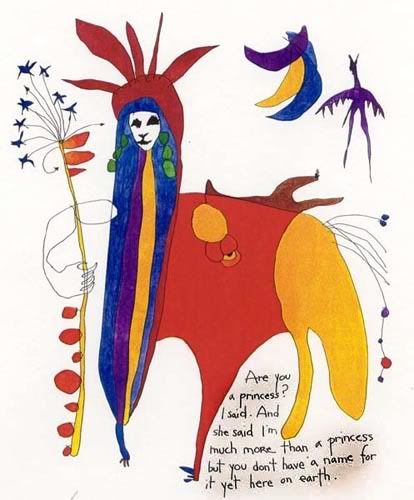
Welcome to the artwork/stories of Brian Andreas.
I discovered him while shopping with my best friend in a small town, and always meant to look him up, but never got around to it, until Super Hero Journals made an entry today mentioning him, and I knew it was time.
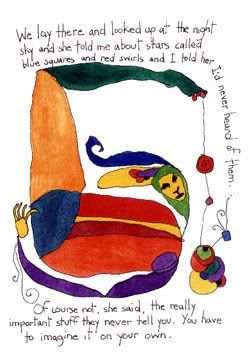
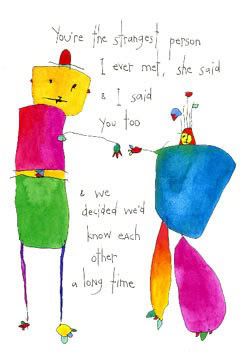
Brian combines watercolor/pen artwork with unique stories or phrases or short sentences that describes an idealistic truth in life, and I think we can all sympathize with his work. Please, please, please check him out. I think you'll find a picture there that you'll absolutely adore.
Monday, September 04, 2006
RIP, Steve
Steve Irwin is dead. If you haven't heard the news, google the story, because I'm not going to reiterate for you. Suffice to say it was tragic and horrible and writers everywhere should be saddened.
You know... in the words of David Sedaris... I always hoped the world would be united by an armed struggle against the undead or something... but it's beginning to look like a step was made in the direction of world peace through Steve's death.

You may ask... why should writers care?
Well, I'm here to tell you that writers /should/ care. A /lot/. Steve Irwin was an important celebrity icon. He was infamous for several quirks, and we all have made fun of him for being an insane adrenaline-addict. He was also a family man living an impressive love story (which should send your writer senses perking) and an environmentalist/conservationalist, and his death has impacted millions of people all around the world. In case you didn't know, the global impactation of millions of people = writerly caring.
You may now reference Steve in your writing. You may compose a personal narration. You may write a story meant to take place in the past and reference Steve's passing as an impactful event in your character's life. This is ripe with opportunity.
But beyond the capitalism, let us take a moment and mourn for Steve, beloved Crocodile Hunter of Australia.
Rest in Peace, Steve. Rest in Peace.

You know... in the words of David Sedaris... I always hoped the world would be united by an armed struggle against the undead or something... but it's beginning to look like a step was made in the direction of world peace through Steve's death.
You may ask... why should writers care?
Well, I'm here to tell you that writers /should/ care. A /lot/. Steve Irwin was an important celebrity icon. He was infamous for several quirks, and we all have made fun of him for being an insane adrenaline-addict. He was also a family man living an impressive love story (which should send your writer senses perking) and an environmentalist/conservationalist, and his death has impacted millions of people all around the world. In case you didn't know, the global impactation of millions of people = writerly caring.
You may now reference Steve in your writing. You may compose a personal narration. You may write a story meant to take place in the past and reference Steve's passing as an impactful event in your character's life. This is ripe with opportunity.
But beyond the capitalism, let us take a moment and mourn for Steve, beloved Crocodile Hunter of Australia.
Rest in Peace, Steve. Rest in Peace.
Subscribe to:
Posts (Atom)


